What Is Talent Management?
What Is Talent Management?
Talent management (often called human capital management) is the strategic, end-to-end process of attracting, hiring, developing, retaining, and offboarding employees. Its primary goal is to align the workforce's capabilities with the overarching goals of a company and organization development.
Rather than viewing employment as a series of isolated HR events, an effective talent management strategy treats the employee journey as a continuous lifecycle.
The 5 Pillars of the Employee Lifecycle
To build organizational capacity and culture, talent managers oversee five critical phases:
Acquisition: Sourcing and hiring top-tier candidates who fit the company culture
Onboarding: Integrating new hires efficiently so they reach full productivity faster
Development: Providing continuous learning, upskilling, and career pathing
Retention: Engaging employees through competitive compensation, strong leadership, and wellness initiatives to reduce turnover
Transition: Managing internal promotions, lateral moves, and respectful offboarding or retirement
Execution Through Broad Partnerships
Because talent management influences every level of a business, it cannot exist in an HR silo. Successful execution relies on a collaborative ecosystem in which talent managers, HR business partners, and line leaders work together to ensure people strategies directly support daily operations and long-term business objectives.
Overview
The Value of Talent Management
TD professionals should have a broad understanding of all talent management functions and how they are integrated so they can align TD goals with those of other talent management functions.
Skills Required for Talent Management
Professionals should have an overview of the skills required to effectively manage and develop talent.
Talent Management vs Talent Acquisition
Many people will confuse talent management with recruitment alone, but just as talent acquisition is a portion of talent management, recruitment is only a portion of the full acquisition process.
Talent Management Models
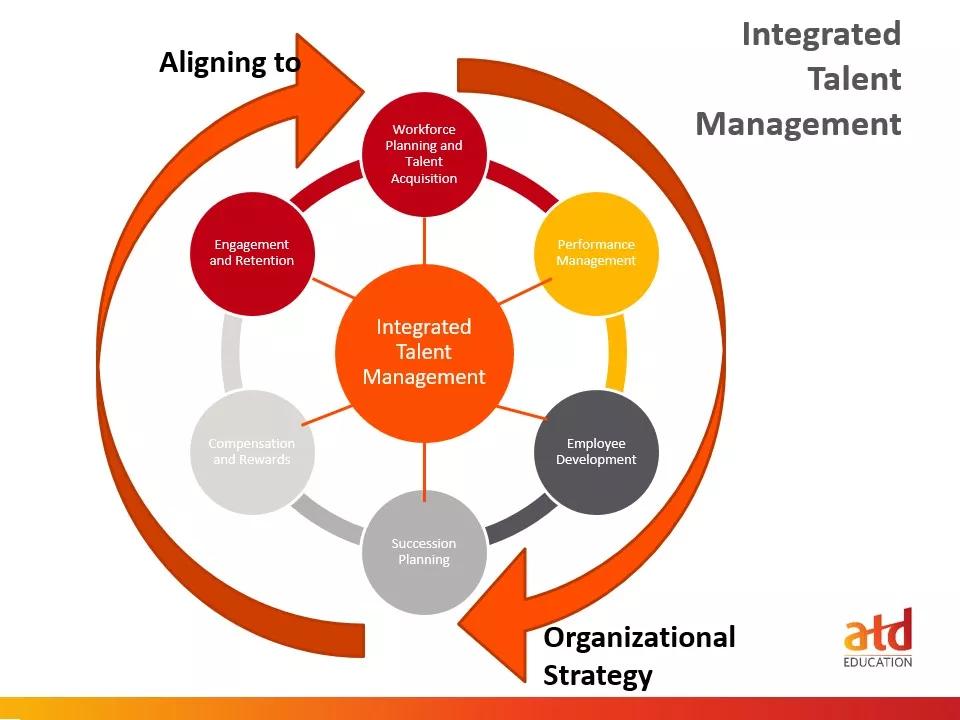
Many talent management models exist, and most start with the planning and acquisition process. In the ATD Integrated Talent Management model, the planning and acquisition phase is aligned to organizational strategy and business objectives.
Talent Management Strategy
A talent management strategy defines how talent will be used to support the organization’s goals. Talent management functions should not operate independently.
Skills Required for Talent Management
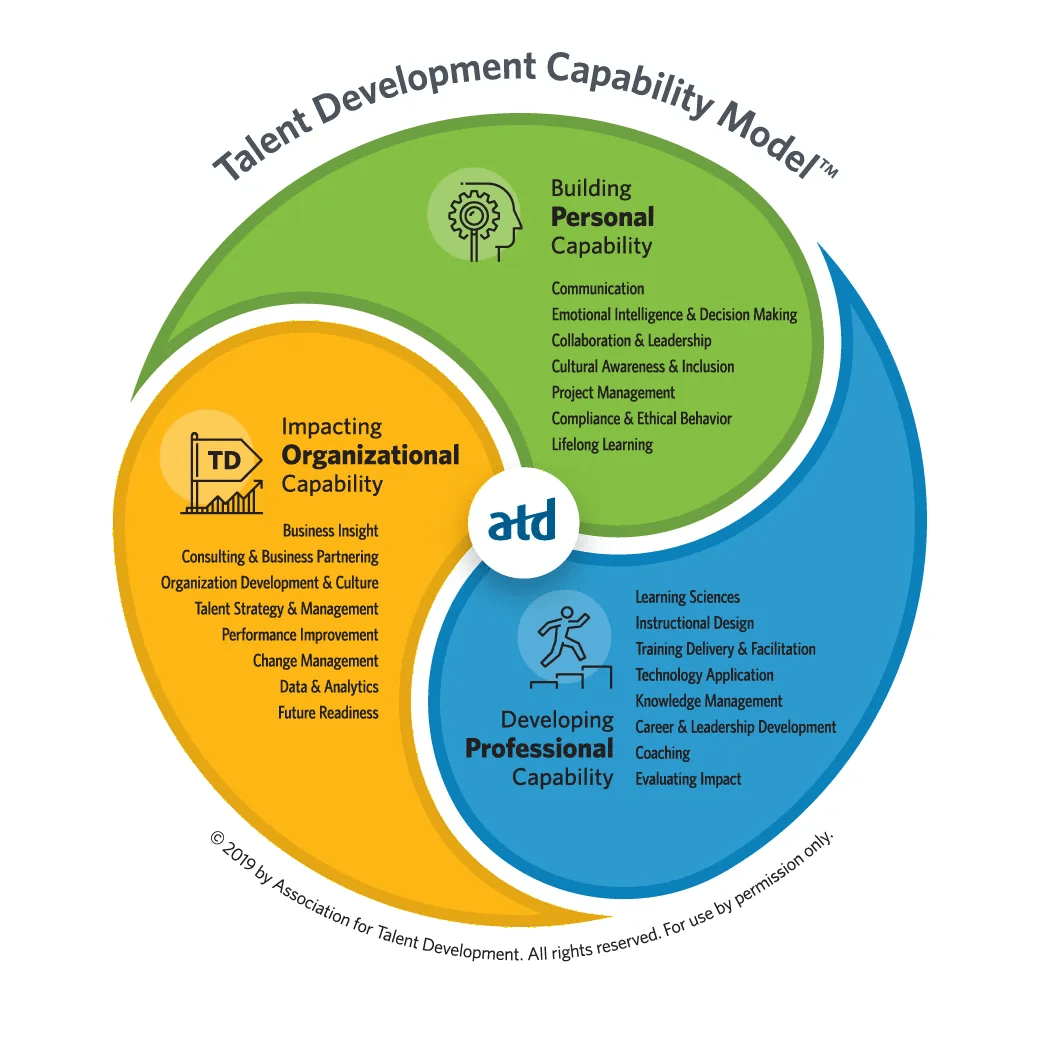
Talent strategy and management are core competencies within the Impacting Organizational Capability domain of ATD’s Talent Development Capability Model™. To succeed, TD professionals must possess deep knowledge of workforce planning, talent acquisition, and performance management, as well as the strategic skills to align learning initiatives with overarching business goals.
Core Knowledge Areas for TD Professionals
Effective talent management requires a foundational understanding of how “people strategies” intersect with business operations. Key knowledge areas include:
Strategic Workforce Planning: Understanding how an organization’s long-term business goals dictate hiring, role design, and task requirements
Talent Acquisition & Lifecycle: Mastery of modern sourcing strategies and onboarding concepts
Performance Management: Knowing how to design feedback experiences that actively drive employee growth, engagement, and retention
L&D and Succession Pipelines: Designing continuous learning frameworks and talent review processes to prepare future leaders
Essential Skills for Strategic Impact
To successfully fulfill an organization's talent capability requirements, TD professionals must be skilled at turning knowledge into execution. Essential skills include:
Strategic Alignment: Creating and aligning the talent development vision directly with the organization's business strategy
Program Design & Execution: Designing, implementing, and managing strategic plans for large-scale TD projects and for the growth of employee training and development
Risk Management: Proactively identifying constraints, resource deficiencies, or cultural roadblocks that could stall a talent initiative
Internal Marketing & Advocacy: Establishing marketing strategies to promote TD programs and clearly communicating the business value of professional development to stakeholders
Future-Proofing the Workforce: Developing data-driven workforce plans that map out current and future skill requirements, while deploying robust performance management strategies
Why Talent Management Matters
Talent management matters because it directly correlates with organizational performance, employee retention, and bottom-line growth. By integrating workforce planning with learning and development, companies build an engaged workforce that is more productive, more loyal, and highly adaptable to market changes.
Without structured talent management strategies in place, organizations struggle with low engagement, high turnover, and critical skill gaps. A holistic approach transforms the entire employee life cycle into a competitive advantage.
1. The Strategic Starting Point: Workforce Planning
An effective talent strategy begins with strategic workforce planning. This process allows organizations to look ahead by forecasting future talent needs and comparing them against current internal capabilities. When talent development professionals understand how these functions integrate, they can align learning goals directly with the company's future staffing requirements.
2. Measurable Business Impact Across the Employee Lifecycle
Strong talent management is not just a cultural win—it is a financial and operational necessity. Research highlights a direct link between robust talent strategies and organizational success:
Optimized Onboarding: A structured onboarding process can increase employee retention by up to 82%, significantly lowering early-stage turnover costs.
Continuous Professional Development: Providing clear growth paths signals to employees that they are valued, fostering deep organizational loyalty, higher productivity, and elevated engagement.
Positive Offboarding: Managing transitions with care turns departing employees into lifelong brand ambassadors, protecting the company's reputation and boosting talent acquisition efforts.
3. Culture, Engagement, and the Bottom Line
A workplace with integrated talent processes naturally cultivates a high-performance culture. Studies consistently show that an engaged workforce is more productive, makes fewer errors, and is far less likely to leave. Ultimately, an investment in talent management is an investment in corporate resilience and profitability.
Talent Management vs. Talent Acquisition
Talent acquisition (TA) is a specialized subset within the broader talent management framework. While talent acquisition focuses strictly on the strategy of sourcing, evaluating, and hiring new employees, talent management encompasses the entire employee lifecycle, including long-term retention, development, and succession.
A common misconception is treating these terms interchangeably or confusing both with simple recruitment. Understanding the exact organizational hierarchy of these functions is crucial for an effective workforce strategy.
The Talent Framework Hierarchy
To put their relationship into perspective, consider how each function feeds into the next:
Talent Management (The Whole): The overarching strategy governing the entire employee lifecycle (Hire-to-Retire)
Talent Acquisition (The Step): The specific phase of talent management dedicated to finding and onboarding external talent
Recruitment (The Action): A single tactical component of the larger talent acquisition process, focused on filling immediate open roles
The 4 Pillars of Talent Acquisition
An effective talent acquisition approach is always forward-looking, guided by both the current and future needs of the business. It is broken down into four primary categories:
Recruit and Attract: Building a compelling employer brand and maintaining a continuous candidate pipeline
Interview and Assess: Designing relevant candidate assessments to evaluate skills and cultural fit before referring talent to hiring managers
Hire: Managing the job offer, negotiations, and administrative selection details
Onboard: Initiating the integration process to ensure the new hire is equipped and educated for immediate job success
True talent acquisition looks past the initial job offer. By strategic design, it directly influences how a company integrates, equips, and educates new team members. This proactive handoff ensures a sustainable, positive on-the-job experience for the employee from day one, setting the stage for the broader talent management lifecycle to take over.
Talent Management Models and Strategy
In a modern workforce characterized by rapid job transitions, a structured talent management framework is essential for business continuity. While many operational frameworks exist, the ATD Integrated Talent Management Model is widely recognized for its ability to align human capital directly with organizational strategy and business objectives.
By linking all six phases of the employee lifecycle into a unified ecosystem, organizations can build a system where talent development directly fuels corporate goals.
The 6 Phases of the ATD Model
1. Workforce Planning and Talent Acquisition
This initial phase establishes the core competencies, skills, and capabilities required across the organization. It combines short-term forecasting and predictive scenario planning to determine hiring needs, which are then fulfilled by sourcing top-tier talent through internal mobility or external candidate pipelines.
2. Performance Management
Rather than a simple annual review, this phase is an active, ongoing process. It involves establishing clear employee expectations, providing continuous feedback, evaluating output, and aligning performance outcomes with appropriate recognition or development plans.
3. Employee Development
A collaborative partnership between the employer and the workforce, this phase focuses on upskilling and reskilling. It ensures employees possess the necessary capabilities to excel in their current roles while simultaneously preparing them for future internal opportunities.
4. Succession Planning
This proactive phase mitigates organizational risk by identifying and cultivating high-potential employees to step into critical roles. Effective succession planning ensures the company is prepared to meet both sudden talent shortages and long-term leadership transitions. Mentoring is a common tool used for succession planning.
5. Compensation and Rewards
This phase encompasses the total rewards strategy used to attract and motivate talent. Beyond baseline salary and bonuses, it includes comprehensive benefits packages, health and wellness options, retirement contributions, and paid time off (PTO).
6. Engagement and Retention
Engagement and retention are the direct, measurable results of the previous five phases working successfully. Employee engagement is the emotional investment a worker has in their organization, while retention is the company's ability to keep its highest performers.
By incorporating the steps in this model and building them out into an integrated talent management strategy, talent management professionals can create an organization-wide system that aligns talent needs with business objectives and goals.
Building a Talent Management Strategy
A talent management strategy is a comprehensive plan that defines how an organization's human capital will be deployed to support long-term business goals. Rather than allowing HR functions to operate in silos, an integrated strategy unifies talent systems, data analytics, and organizational tools into a single, cohesive ecosystem.
The scale of this strategy often depends on the organization's size. In small businesses, a single talent professional may design the strategy alongside line managers. In enterprise organizations, TD leaders must collaborate across specialized talent management teams to ensure total organizational alignment.
Core Components of an Integrated Talent Strategy
A modern, resilient talent strategy goes beyond basic HR functions to incorporate a cross-functional mix of frameworks and tools:
Analytics and Technology: Utilizing talent management software solutions and data analytics to track workforce performance and trends
Organizational Psychology: Applying career development theories, change management models, and individual assessment tools
Culture and Compliance: Embedding diversity, equity, and inclusion (DEI) practices alongside strict legal and ethical compliance frameworks
6 Strategic Planning Tools for Talent Development
To analyze internal and external factors and map out future talent requirements, TD professionals leverage the same proven frameworks used in corporate business planning:
SWOT Analysis: Evaluates internal Strengths and Weaknesses of the current workforce, while identifying external Opportunities and Threats
Scenario Planning: Imagines future market events and disruptions to establish proactive talent objectives and responses
Environmental Scans: Examines external macroeconomic factors impacting future success, including political, economic, sociological, and technological (PEST) shifts
Industry Scans: Looks specifically at competitive trends and shifting dynamics within the organization’s direct market sector
Senior Leader Interviews: Validates data-driven insights and ensures talent strategies match executive-level business objectives
Employee Surveys and Interviews: Gathers qualitative internal data to identify immediate performance gaps and career development needs
The insights gathered from these external and internal scans create a definitive roadmap for how talent can drive business success. These strategic requirements are then refined and executed through the continuous strategic workforce planning process.
Frequently Asked Questions About Talent Management
What is talent management?
Talent management is the strategic, end-to-end process of attracting, hiring, developing, retaining, and offboarding employees. Its primary goal is to align the workforce's capabilities with the overarching goals of the organization.
Why is talent management important?
Talent management matters because it directly correlates with organizational performance, employee retention, and bottom-line growth. By integrating workforce planning with learning and development, companies build an engaged workforce that is more productive, more loyal, and highly adaptable to market changes.
How is talent management different from talent acquisition?
Talent Management is the overarching strategy governing the entire employee lifecycle, while talent acquisition is a specific phase of talent management dedicated to finding and onboarding external talent.
What does a talent management strategy include?
A talent management strategy is a comprehensive plan that defines how an organization's human capital will be deployed to support long-term business goals. An integrated strategy unifies talent systems, data analytics, and organizational tools into a single, cohesive ecosystem.
What skills are important in talent management?
Talent management requires a dual mix of core business knowledge and strategic execution skills. TD professionals must understand workforce planning, talent acquisition, and performance systems, while possessing the tactical skills to align, market, and future-proof these programs in lockstep with the company’s business objectives.
Related ATD Resources
Since our founding in 1943, ATD’s focus has been on helping talent development professionals succeed in their roles by applying best practices and improving organizational outcomes. ATD curates the best content from the world’s leading experts, providing designers with opportunities to learn the latest techniques and technologies.
Because we look at talent development holistically, we understand how instructional design fits with evaluation, training, and other aspects of workplace learning. In addition, we are the leading organization that defines standards for the field in instructional design and talent development.
Sign up for our Talent Management and Organization Development Newsletter to stay up to date on the latest content or register for ATD’s Integrated Talent Management Certificate program. You can also discover the wide range of ATD education courses to find the right program for you.
Free Job Aid: Career Progression Framework Guide
Your organization’s talent pipeline depends, in part, on people knowing they can progress in their career within the company. This career progression framework outlines milestones you can expect at each leadership level.