Talent Development Leader
Fueling Organizational Effectiveness
At Cox Automotive, TD is not only flexible, but also adaptable, functional, and forward-thinking.
Tue Oct 14 2025
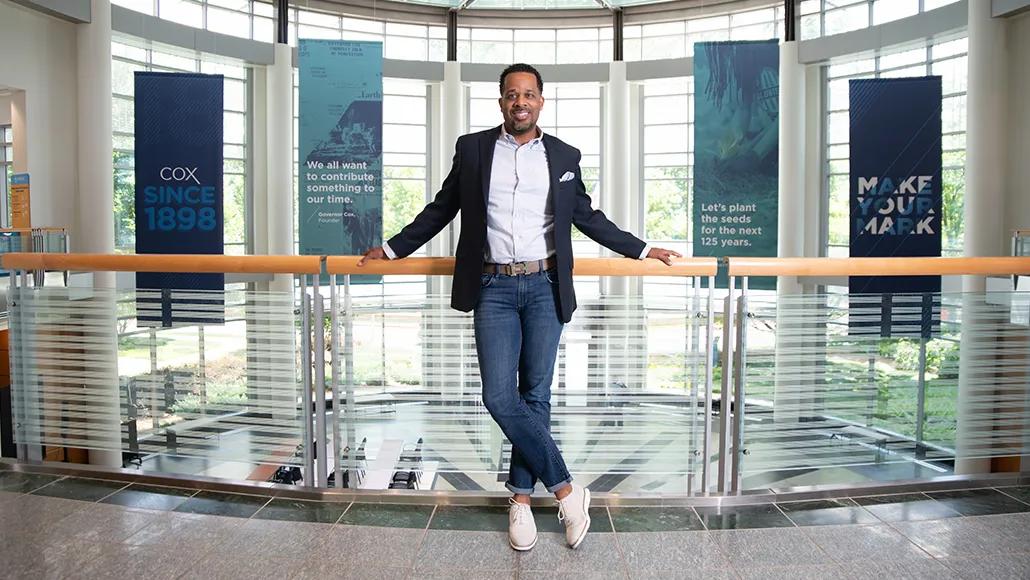
“The skills our employees had yesterday aren’t adequate for today, and they certainly won’t meet the talent needs we have tomorrow,” says Matthew Harrison, vice president of talent, learning, and organizational effectiveness (TLOE) for Cox Automotive.
As the world’s largest automotive services and technology provider, Cox Automotive is focused on transforming the auto industry through digital solutions and leveraging data to improve the car buying, selling, and ownership experience. More than 29,000 employees serve shoppers, automakers, dealers, retailers, lenders, and fleet owners across a suite of trusted brands, including Autotrader, Dealertrack, Kelley Blue Book, and Manheim.
A majority of the organization’s workforce falls within two lines of business: inventory solutions and mobility solutions. Inventory solutions include everything related to dealership sales and auctions. In addition to management, marketing, and sales professionals, the operational area requires mechanics, body repair technicians, and detailers. Mobility solutions focus on fleet maintenance for large organizations such as FedEx or Amazon. Technicians based in approximately 40 shops with more than 1,200 mobile trucks offer scheduled maintenance and 24/7 emergency mobile service.
“Technology underpins nearly all functions,” Harrison states. He explains that the retail solutions group at Cox Automotive delivers a comprehensive suite of technologies that empowers dealers to manage sales, service, marketing, and operations across the entire vehicle life cycle. Meanwhile, the product and technology team drives strategic innovation and operational excellence by developing and maintaining customer relationship management systems, back-office data management, and scheduling programs.
The biggest challenge facing the company is how rapidly the industry changes, according to Harrison. “We experience constant regulatory shifts, digital disruption, and evolving customer expectations,” he explains.
A lot of moving parts
Cox Automotive follows a decentralized approach to workforce development, with specific lines of business and functional areas managing their own technical training needs.
When Harrison joined the organization in 2022, he transitioned the TLOE team—which covers talent and performance management, workforce planning, managerial and soft skills training, and change management—from an order-taker role to a performance consultant function. Using a consultative approach, TLOE partners with HR leaders, who liaise with various operations throughout Cox Automotive’s brands. They meet on a weekly or monthly basis to gather insights and feedback, analyze data, and uncover common workforce skills and competency gaps.
“Though it may seem like an obvious skill gap, through a deeper conversation, you realize that gap is just a piece of a larger issue,” Harrison explains, adding that more information means that his team can shift from “putting a Band-Aid on something to being able to develop a comprehensive treatment.”
For instance, an HR business partner may complain that a function or team is experiencing a communication issue. In that scenario, Harrison says his team would ask: “How long has this been an issue? Where are people seeing the issue surface? What parts of the business are impacted? What sort of problems are happening because of the communication breakdown?”
Based on what the team uncovers, it may develop new communication training. However, Harrison notes, “more likely, something else is going on with these teams. The end result may be a broader program on collaboration where communication is just one of the focus areas.”
In that case, TLOE would roll out a course it has already developed and enhance the existing communication component. The team may also leverage a curated list of supplemental offerings via LinkedIn Learning.
“It’s all about taking a more robust and holistic approach to a skill gap or a competency issue,” asserts Harrison.
Adaptability is key
When TLOE moved to a learning and performance consultant model, the function also went through intensive training on how to transition team members from trainers to facilitators. The move, Harrison says, enabled the team to develop generalized learning assets and programs that would work across Cox Automotive’s various brands.
Now, the bulk of content is “job agnostic” because learners in a particular course rarely come from the same functional area or brand.
“We design our courses so that the concepts are more universal, and the facilitator guides the discussion and exercises so the learner can apply those concepts to their day-to-day routine assignments or tasks,” Harrison states. “They don’t just cover the content but help learners understand how the work they do ties to work that might seem tangential to the performance of others.”
Shifting gears
“Our organization continuously shifts and changes,” Harrison notes. “As we move into new verticals and the industry morphs in general, how can my team ensure that our organization is structured in a way to meet evolving demands?”
That is where the organizational effectiveness facet of TLOE helps steer the company in the right direction.
The department’s goal is to find pathways and resources that direct teams through change in a “more thoughtful and methodical way,” Harrison says.
One initiative, Leading Through Change, is a course that helps managers guide their teams to understand and accept new ways of working. It introduces the nuts and bolts of change management as well as raises awareness about some of the hazards of moving through a large-scale change effort and how supervisors can help reinforce new behaviors and performance among their team members.
In addition, TLOE recently piloted a new course focused on developing a continuous improvement mindset. Harrison explains that the program seeks to have managers explore “How do you go about creating this new mindset not only for yourself as a leader, but also for your team members? How do you get your team to innovate and consider more effective and efficient ways of working?”
Making sense
TLOE also can examine the design of specific roles and teams to assess whether they support the needs of the function or if alternative processes, roles, or skills are necessary.
For instance, a team within the inventory solutions group was considering a restructuring to better meet customer demand. TLOE’s organization design team conducted a needs analysis to determine what that optimum team would need to look like to deliver work differently and meet new goals. It also assessed strengths and weaknesses of current work procedures, individual tasks, and team composition. The team investigated new opportunities to recommend the ideal work redesign.
Harrison explains that sometimes it’s not a particular redesign effort that requires his team to step in and analyze organizational effectiveness. Instead, oftentimes, leadership focuses on having individuals at certain levels or job titles, but the duties and amount of control those workers demonstrate on the job don’t warrant the roles.
“A lot of our org design work is around analyzing and ensuring that the role, level, and title someone is at makes sense based on the tasks, responsibilities, and number of reports they have within the larger job framework,” he says.
Running on all cylinders
“When I came into this role, the teams within TLOE were pretty siloed,” states Harrison, adding that the L&D team rarely, if ever, partnered with the talent management or organizational effectiveness teams and vice versa. Consequently, during his first year, Harrison focused his attention on getting the teams to collaborate.
“I told them that if you complete a project or initiative in your area and you haven’t worked with anyone in a different subfunctional area, you probably haven’t done that work as robustly or comprehensively as you could have,” he says.
As a prime example, Harrison discusses how succession planning is an important factor for planning L&D. “Maybe an employee isn’t ready to move into a leadership position today, so we need to have a conversation about what we can do to prepare them. That discussion should inform the employee’s development plan, which should then tie into learning offerings like training or coaching,” he states.
Data gleaned from those discussions about readiness can “feed knowledge about where the organization has skill or talent gaps, which can feed into workforce planning and org design,” Harrison continues. Furthermore, there are “opportunities to help the business better understand the work TLOE does and how we add value.”
To showcase TLOE’s role in talent and long-term workforce planning, Harrison conducted a “road show” for members of the executive team. The road show reviewed various training and employee development opportunities, summarized TLOE’s ability to deliver critical employee analytics, and described its capability to help guide change management and organizational development efforts.
“That time between 2022 and 2024 allowed my team to begin to better collaborate and understand how all our pieces fit together. We were in a better position to tell our story and explain the potential impact we could have on the business,” says Harrison.
Today, TLOE is developing a dashboard that will outline metrics related to topics such as training, succession planning and retention, leadership development, and employee engagement.
Harrison says the goal is for “a functional area or team to very quickly see how they currently measure up. For example, how are they doing when it comes to the health of their succession plans? Are their teams participating in L&D programs and courses?”
“When we understand and demonstrate how all these distinct parts of talent development fit together, we can make a more meaningful impact on the organization today and in the future. That’s when we can really start to add value,” he concludes.
View Courses Recommended for You